
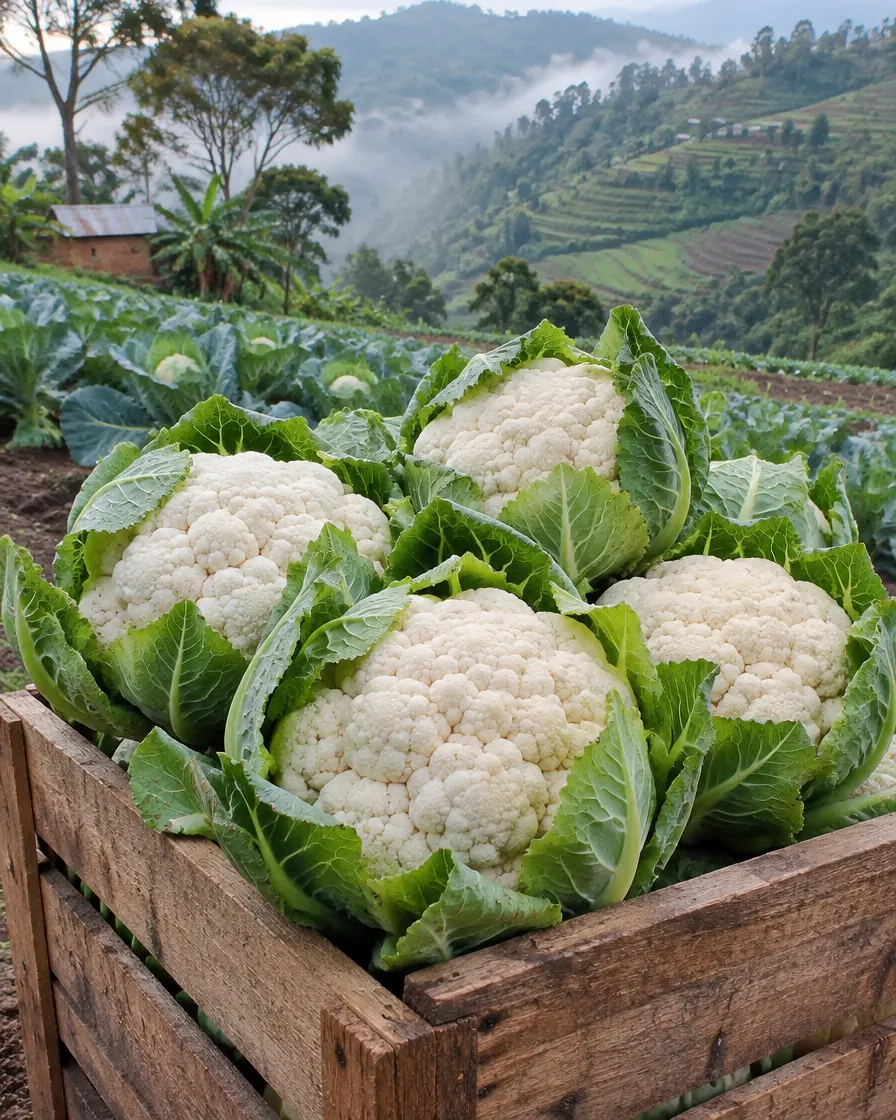
High in the Usambara Mountains of north-eastern Tanzania, the town of Lushoto sits among steep green valleys, terraced slopes and morning mist. For buyers of fresh vegetables it is one of the most important names in the country. A great deal of the cabbage, cauliflower, leeks, carrots and other cool-climate vegetables served in Tanzanian hotels and sold in city markets begins on smallholder farms here. This guide explains what makes Lushoto special, which vegetables it grows best, and how hotels, wholesalers and export buyers can source from it reliably.
Where is Lushoto?
Lushoto is a district in Tanga region, set in the West Usambara Mountains. The road to Lushoto climbs up from Mombo, on the main highway between Dar es Salaam and Arusha, so the highlands are within a day's road trip of Dar es Salaam, close to the port city of Tanga and on the way to Arusha.
The mountains rise well over a thousand metres above the surrounding plains. That height is what matters for vegetables: it brings cool nights, mild days and two rainy seasons a year, conditions that the lowland coast simply does not have.
Why Lushoto grows such good vegetables
Many of the vegetables buyers want most are cool-season crops. They grow slowly and evenly in mild weather, and they suffer in heat. Lushoto suits them for several reasons:
- Cool, steady climate. Cabbage forms firm heads, cauliflower keeps a tight white curd and carrots grow sweet and straight when the weather stays mild.
- Reliable rain. The highlands receive rain in two seasons, which, together with careful watering, lets farmers plant in stages and keep supply going through much of the year.
- Deep, fertile soil. The dark mountain soils hold moisture and nutrients, which is why root and leaf crops do so well here.
- A long farming tradition. Usambara farming families have grown vegetables for many years, often on hand-built terraces, and sell them across Tanzania.
The vegetables of Lushoto
Cabbage (kabichi)
Lushoto cabbage is known for firm, dense green heads that keep well and travel well. It is a staple for hotel kitchens, caterers and markets. See our fresh cabbage page for grading and packing.
Cauliflower (koliflawa)
Cauliflower needs cool weather to form a good white curd, which makes the Usambara highlands one of the best places in Tanzania to grow it. Heads are cut while the curd is still tight and white, then kept shaded and cool on the way to market. See fresh cauliflower from Lushoto.
Leeks
Farmers earth up the stems as leeks grow, which blanches a long, white shank — the part chefs pay for. Lushoto leeks go into soups, stocks and sauces in hotels from Dar es Salaam to Zanzibar. See fresh leeks.
Carrots (karoti)
Deep, loose soil and mild weather give Lushoto carrots their straight shape, good colour and sweetness. They are washed, graded by size and packed for kitchens and retail. See fresh carrots.
Ginger
The Usambara slopes around Lushoto are also ginger country. The ginger is grown outdoors in the soil, not in hydroponic or greenhouse systems, and spends its full season in the ground. Together with Same in the South Pare Mountains, Lushoto supplies much of the ginger we offer to wholesale and export buyers. See ginger from Tanzania.
Watermelon from the Lushoto lowlands
Not all of Lushoto district is mountain. Below the Usambara escarpment lie warm lowlands, and there the heat-loving crops take over. Our watermelon (tikiti maji) comes from these Lushoto lowlands, where sunshine and free-draining soil build sweetness in the fruit.
How the vegetables are farmed
Most Lushoto vegetables are grown by smallholder families on small plots, often on terraces cut into the slopes. Our highland vegetables are organically grown and non-GMO: farmers rely on natural farming — crop rotation, mulching, compost and careful water management — with agronomy guidance from our team. They are not certified organic. If your market requires certification, tell us when you enquire and we will be straight with you about what we can offer. You can read more on our organically grown produce page.
From the mountain to your kitchen
Freshness is won or lost in the hours after harvest. This is how we handle Lushoto vegetables:
- Harvest in the cool of the morning, when the produce holds the most moisture.
- Keep it shaded from the moment it is cut, because sun quickly wilts leaves and yellows cauliflower.
- Trim, sort and grade by size and quality, to the specification each buyer works to.
- Pack in ventilated crates or cartons so the produce can breathe on the road.
- Move it fast by road to Dar es Salaam, Tanga and Arusha, and across to Zanzibar from Dar es Salaam.
Closer to Dar es Salaam: Mkuranga
Some crops grow better in warmth than in the mountains. Our red and yellow capsicum (pilipili hoho) and sweet corn (mahindi matamu) come from Mkuranga, in the Coast (Pwani) region just south of Dar es Salaam. Being so close to the city, they reach Dar es Salaam kitchens within hours of picking, which matters most for sweet corn, whose sweetness fades quickly after harvest.
Who buys Lushoto vegetables from us
- Hotels, resorts and restaurants in Dar es Salaam, Arusha and Zanzibar that need the same quality every week. See fruit and vegetable supply for hotels.
- Supermarkets and retailers that want clean, graded produce in consistent packs.
- Wholesalers and distributors buying by the crate.
- Export buyers in East Africa and the Gulf. See export from Tanzania.
Frequently asked questions
What vegetables come from Lushoto? Lushoto is best known for cool-climate vegetables: cabbage, cauliflower, leeks and carrots, as well as ginger. The warm lowlands of the district also grow watermelon.
Where is Lushoto in Tanzania? Lushoto is a district in Tanga region, in the West Usambara Mountains of north-eastern Tanzania. The road up to Lushoto starts at Mombo, on the main Dar es Salaam to Arusha highway.
Why are vegetables from the Usambara Mountains so good? The altitude gives cool nights, mild days and two rainy seasons, and the soils are deep and fertile. Cool-season crops such as cabbage and cauliflower grow slowly and evenly in these conditions, which gives firm heads and clean curds.
Can you deliver Lushoto vegetables to hotels in Zanzibar? Yes. We supply hotels, restaurants and caterers in Zanzibar, sending produce across from Dar es Salaam on a regular schedule.
Are Lushoto vegetables organic? Ours are organically grown and non-GMO, using natural farming methods, but they are not certified organic.
Order vegetables from Lushoto
Tell us what you need, how much and how often, and where it should be delivered, and we will come back with availability and terms. Start from any product page — cabbage, cauliflower, leeks, carrots, ginger or watermelon — or contact us directly.
From Tanzanian farms to global markets
Back to all stories